
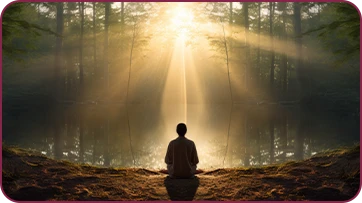
Solitude vs. Loneliness: Why Most People Get It Wrong
In a world constantly buzzing with notifications, conversations, and endless digital noise, the idea of being alone often feels uncomfortable—even frightening. Many people equate solitude with loneliness, assuming that being by oneself must mean something is missing. But in reality, these two experiences are fundamentally different.
In Dr. Samadhi Dharma’s insightful book, The Mastery of Positivity, solitude is presented not as isolation but as a powerful state of awareness in which a person reconnects with their inner self and discovers clarity, strength, and purpose.
Loneliness, on the other hand, is not simply about physical isolation. It is the emotional feeling of being disconnected—even when surrounded by people. In this blog, we’ll explore the critical difference between solitude and loneliness, why many people confuse them, and how embracing solitude can lead to personal clarity and inner strength.
The Misunderstood Fear of Being Alone
For many people, being alone can be uncomfortable. Society often teaches us that happiness comes from constant interaction—friends, social gatherings, and relationships. Because of this conditioning, solitude is frequently mistaken for loneliness.
But Dr. Samadhi Dharma explains in The Mastery of Positivity that solitude is not about withdrawing from the world. Instead, it is about creating an inner sanctuary—a mental space where you reconnect with your true self.
The problem arises when people avoid this inner space. Instead of spending time with their thoughts, they fill every moment with distractions: social media, noise, and endless activity. Over time, this avoidance creates a deeper sense of disconnection.
Ironically, the more we avoid solitude, the more likely we are to feel lonely.
Loneliness: When You Lose Connection With Yourself
Loneliness often appears when we lose touch with our inner voice.
You can feel lonely even in a crowded room. You can feel lonely in a relationship. You can feel lonely surrounded by friends and family.
This happens because loneliness is not about the absence of people—it is about the absence of connection.
When individuals rely entirely on external validation for happiness, they slowly disconnect from their inner world. Their thoughts, emotions, and personal reflections become drowned out by outside expectations.
According to The Mastery of Positivity, loneliness often emerges when people abandon their own inner presence and stop listening to themselves.
In other words, loneliness begins the moment we stop being in a relationship with ourselves.
Solitude: The Gateway to Clarity
Solitude offers something very different.
Rather than creating emptiness, solitude opens a doorway to clarity.
When you step away from distractions, your mind begins to settle. Thoughts become clearer, emotions become easier to understand, and you start noticing patterns in your behavior.
In The Mastery of Positivity, Dr. Samadhi Dharma describes solitude as a state of awareness that can exist even while engaging with everyday life.
It is not limited to sitting alone in a quiet room. Instead, it becomes a mindset—a calm center you carry with you wherever you go.
Through solitude, individuals develop a deeper understanding of themselves, their motivations, and their goals.
The Strength Found in Solitude
Throughout history, many philosophers, leaders, and creators have valued solitude as a tool for growth. Solitude allows the mind to reset, reflect, and make thoughtful decisions.
When you spend time alone intentionally, several powerful changes occur:
- Your thoughts become clearer.
- Your emotional reactions become more controlled.
- Your sense of identity becomes stronger.
Instead of reacting to every external influence, you begin to respond thoughtfully and intentionally.
Solitude also builds independence. When you learn to enjoy your own company, relationships become healthier and more balanced. Instead of seeking people to fill a void, you connect with others from a place of wholeness.
This shift changes how you experience both yourself and the world around you.
The Inner Sanctuary: A Space Most People Ignore
One of the most powerful ideas in The Mastery of Positivity is the concept of the inner sanctuary.
This sanctuary is not a physical place but a mental and spiritual space where individuals can retreat to reconnect with their true selves.
Most people rarely visit this inner space because they are constantly distracted by external noise. However, when someone learns to enter this sanctuary through solitude, they discover a sense of peace that does not depend on external circumstances.
In this quiet inner world, clarity emerges. Questions become easier to answer, emotions become easier to manage, and life decisions become more thoughtful.
Solitude, therefore, becomes not an escape from life but a deeper engagement with it.
Why People Confuse Solitude With Loneliness
The confusion between solitude and loneliness arises because both involve being physically alone.
But the emotional experience is completely different.
Loneliness feels heavy, empty, and disconnected.
Solitude feels calm, reflective, and empowering.
Loneliness says, “No one is here for me.”
Solitude says, “I am here with myself.”
The difference lies in awareness.
When a person learns to embrace solitude, the fear of being alone disappears. Instead, time alone becomes an opportunity for growth, creativity, and self-discovery.
Conclusion: Returning to Yourself
In today’s fast-paced world, the ability to be alone with our thoughts is becoming increasingly rare. Yet this ability may be one of the most valuable skills we can develop.
Dr. Samadhi Dharma’s The Mastery of Positivity reminds us that solitude is not isolation—it is reconnection.
It is the moment we stop running from ourselves and start listening again.
Loneliness happens when we abandon that connection. Solitude happens when we return to it.
When embraced intentionally, solitude becomes a powerful tool for clarity, emotional strength, and inner peace. It allows us to understand who we truly are, what we value, and how we want to move forward in life.
So the next time you find yourself alone, pause before labeling it as loneliness.
It might just be the beginning of discovering yourself again.